Measurement guidance
The Truth About Lab Equipment Procurement: What a 5-Year Buyer Wants You to Know
When you see a low price on lab equipment, the real question isn't “Can I get a better deal?” – it's “What’s not included?” After managing $150k+ in lab purchases across 400 employees and 3 sites for the last 5 years, I've learned that the cheapest quote usually ends up costing 15–30% more once you add calibration, training, downtime, and compliance headaches. One hidden fee alone last year ate $2,400 from our department budget. That's why I now default to vendors who show me the total cost upfront, not the pretty teaser price. And for our lab, that’s meant sticking with brands like Sartorius – not because they're always the cheapest, but because what they quote is what we pay.
Why Trust Me on This?
I’m an office administrator for a mid‑size biotech company. I handle all equipment and consumable ordering – roughly $150k annually across 8 vendors. I report to both operations and finance, so I live in the tension between “get the best price” and “don't let anything break.” I took over purchasing in 2020, right when supply chains were a mess, and I've been figuring out the real cost of things ever since.
Here's a quick story that changed everything: In 2022, I saw a great price on chromatography columns from a new supplier – 18% cheaper than our regular vendor. I placed an order for 5 columns. They arrived on time, but when we tried to connect them to our existing Sartorius system, the fittings didn't match. The vendor’s spec sheet said “standard,” but “standard” isn’t universal in lab equipment. We had to buy adapters and redo calibration – total extra: $1,800. Plus two weeks of lost productivity. I learned never to assume “same specifications” means identical results across vendors.
What I’ve Learned About Each Equipment Category
Balances & Precision Weighing
Don't just compare the balance price – compare the calibration cost. I assumed all calibration services were basically the same. Turns out some vendors hide the first year of calibration in the purchase price, others charge separately. Sartorius lists their calibration packages clearly on the quote, so I know what I'm getting. We bought 12 precision balances in 2024, and the upfront transparency helped me avoid a $600 surprise.
Chromatography Systems & Consumables
This is where hidden costs really bite. Columns, pumps, fittings – each manufacturer has subtle differences. I've seen a “compatible” column that needed a $400 adapter kit to work with our system. Now I always ask: “Show me the complete bill of materials, including all connection parts, and state whether they've been tested with my existing hardware.” Sartorius's sales team actually sent me a compatibility checklist before I even signed anything – that kind of upfront honesty is rare.
Dissolved Oxygen & Safety Sensors
We use dissolved oxygen sensors in our bioreactor monitoring, plus safety sensors for gas detection. I used to focus on the sensor price alone. Then a cheap sensor gave false readings for three weeks before we caught it – that nearly ruined a batch worth $50k. Now I look at mean time between failures (MTBF) and calibration intervals, not just the tag price. Sartorius’s DO sensor specs include a 2‑year calibration interval, which basically cuts my maintenance labor in half compared to the budget alternative.
For safety sensors like the DGS35 encoder (yes, we have those on some automated lines), reliability is non‑negotiable. The cost of a safety system failure – even a false alarm – can shut down production. I've learned to pay more for sensors with certified compliance (SIL ratings, ATEX, etc.) because the paperwork alone saves hours during audits.
Pipettes & Training (Including Eppendorf Repeater Pipettes)
Our lab has a mix of pipette brands, including Eppendorf repeaters. A year ago, I got complaints that pipette accuracy was drifting. Turns out people weren't using the repeater correctly – they were over‑aspirating because no one had shown them the proper technique. I could have blamed the equipment, but the real problem was training.
So I booked a training session – not from Eppendorf directly, but from Sartorius's application support team. They offer generic pipetting best practices courses that cover any brand. It cost $450 for a half‑day session and saved us thousands in potential rework. The team now knows how to use the repeater pipette correctly (prime twice, hold the plunger steady, etc.). That's the kind of value that doesn't show up on a price sheet.
The Real Cost of “Cheap” – A Quick Breakdown
Let me give you a concrete example from last year. I compared two quotes for a chromatography system:
- Vendor A (low base price): $22,000 + $1,800 required calibration kit + $600 shipping + $900 rush setup (because they took too long) = $25,300
- Vendor B (transparent, mid‑price): $24,500 all‑in, including delivery, installation, and first‑year calibration. No surprises.
Vendor B was actually $800 cheaper in total, and I didn't have to argue with finance about unexpected invoices. The “cheap” quote was a trap.
When Transparent Pricing Doesn't Apply
I'll be honest – sometimes you have to accept less transparency. If a critical sensor fails and you need a replacement tomorrow, you pay what the local distributor asks. No time to compare. But those are emergencies, maybe 10% of my orders. For the other 90% – the planned purchases – I insist on upfront breakdowns. If a vendor can’t or won't list all fees in the first quote, I move on. That rule has saved me more money than any “negotiated discount” ever did.
One more thing: this approach works best for standard laboratory equipment. If you're buying custom‑built prototypes, the pricing is naturally more opaque. But for balances, pipettes, sensors, columns, and consumables – the stuff our scientists use every day – transparency is a choice the vendor makes. I choose the ones that make it.
It took me 5 years and dozens of costly mistakes to get here. But now when I see a low price, I don't get excited. I get suspicious – and I start asking “What's not included?” That question has saved my department about $12k in the last 12 months alone. And it's made me a better partner to both my internal teams and my finance department.
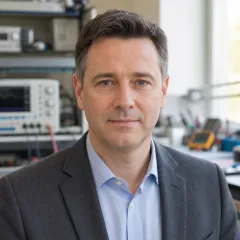
Marcus Feld
Marcus Feld is an electrical test and measurement analyst specializing in multimeters, oscilloscopes, clamp meters, insulation testers, spectrum analyzers, and data loggers. He applies IEC 61010-2-030 and IEC 61010-031 concepts while examining measurement category, bandwidth, true-RMS response, input loading, and stated uncertainty. His work helps maintenance engineers and test teams choose safe instruments with performance suited to the signals and environments they actually measure.
Have a measurement question related to this article?
Send the application context and we will route it to the right product or service specialist.